
An unexpected gallery visit, a shared fascination with retro aesthetics, and a thoroughly enjoyable conversation with an artist.
While my wife was busy exploring the shops of Treviso, I took the opportunity to visit a small art gallery. After all, one has to get one’s priorities straight. And while some people return home with shopping bags, I prefer to collect impressions and interesting encounters.
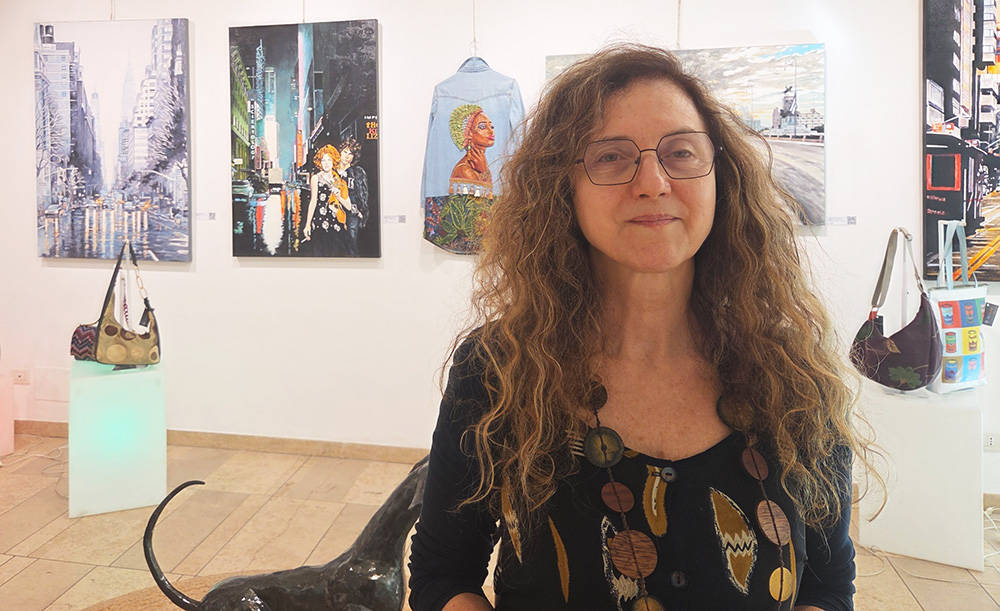
At the small Galleria Spazio 5 on Via Pescheria, I discovered Fuori Cornice, an exhibition by the artist Giò Stefan. One glance at her paintings was enough to convince me that I wouldn’t be leaving anytime soon. Hollywood, vintage aesthetics, American cities, classic cinema and, above all, a particularly appealing use of colour.
Perhaps her work also resonates with me because I have a certain fondness for all things retro myself. Although “a certain fondness” might be putting it rather mildly.
What made the visit particularly enjoyable was that the artist herself was there. Giò Stefan turned out to be an exceptionally warm, friendly and open person. We talked about her work, and I thoroughly enjoyed our conversation. Encounters like these are often just as rewarding to me as the artworks themselves. There is, after all, quite a difference between standing in front of a painting and forming your own impressions, and having the opportunity to speak with the person who created it.
From Architecture to Painting
Giò Stefan, whose real name is Giovanna Stefanutti, studied architecture in Venice and worked for many years as an interior designer before devoting herself entirely to painting. Today, she lives and works in Treviso.
Her architectural background is clearly reflected in her paintings. Her cityscapes, in particular, demonstrate a keen sense of architecture, perspective and spatial composition. Buildings, streets, vehicles and people come together in carefully constructed scenes that sometimes remind me of vintage movie posters.
Her artistic influences include Tamara de Lempicka, Norman Rockwell, Jack Vettriano and Edward Hopper. An intriguing combination of Art Deco, narrative painting, elegantly staged figures and the peculiar atmosphere that characterises Hopper’s American cityscapes.
What particularly appeals to me is her use of colour. Stefan employs bold accents and striking contrasts to create an atmosphere entirely her own. Her colours do not merely describe reality; they shape it. Especially in her American cityscapes, this results in paintings that seem to exist somewhere between memory, film sets and fantasy.
Marilyn, Hollywood and a Rolleiflex
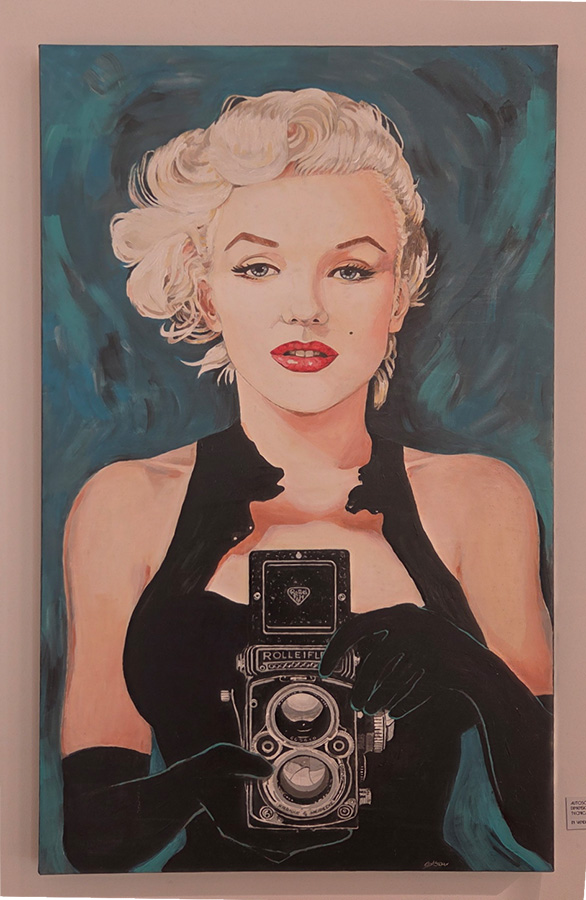
One painting particularly caught my attention: Marilyn Monroe holding a twin-lens Rolleiflex. Platinum-blonde hair, red lips, black gloves and a vivid turquoise background. The image brings together much of what I love about classic Hollywood aesthetics.
And then there’s that camera! Marilyn, one of the most photographed women of the twentieth century, is holding a Rolleiflex herself. A delightful reversal of roles: the woman who normally stands in front of the camera suddenly becomes the photographer.
Stefan’s enthusiasm for cinema extends far beyond classic Hollywood icons. Together with her daughter Sabina, she shares a keen interest in auteur cinema. Hitchcock, Billy Wilder, Tim Burton and Wes Anderson are among her sources of inspiration. Cinematic scenes, unusual compositions and the aesthetics of bygone decades all find their way into her paintings.
I certainly see parallels with my own photographic work. I am less interested in reproducing a person or a scene as faithfully as possible than in the possibilities of staging and interpretation. Light, shadow, composition, expression and atmosphere should work together to tell a story.
Stefan adds colour to the equation. And she handles it in a way that could make me, as a photographer working predominantly in black and white, just a little envious.
Fuori Cornice – When Art Meets Design
The exhibition I visited was entitled Fuori Cornice, meaning “Outside the Frame”. Giò Stefan presented her paintings alongside Originaa, an accessories brand from Treviso.
Her large-format paintings were accompanied by unusual handbags and other accessories. Vintage aesthetics, cinema, fashion and painting came together in a shared visual world. The combination made perfect sense, particularly given the important role that interior design and the creation of everyday objects have played in Stefan’s artistic development.
Galleria Spazio 5 is located at Via Pescheria 5, right in the historic centre of Treviso. The small, bright exhibition space hosts changing art presentations. Previous exhibitions have also explored the relationship between painting and design, including Alchimie Visive. It is certainly a place worth keeping in mind for a future visit to Treviso.
Fuori Cornice ran from 23 to 29 September 2026. Anyone interested in discovering more of Giò Stefan’s work can find additional paintings and information on her
An Encounter to Remember
I left the gallery with plenty of new impressions. Naturally, it was the paintings that initially attracted me: the colours, the retro aesthetics, the references to classic cinema and the pleasure of carefully staged compositions. But my conversation with Giò Stefan was at least as enjoyable.
A genuinely lovely woman with whom I would happily have spent considerably more time talking.
Should I find myself in Treviso again while my wife is investigating the local shops, I will certainly check what is currently on display at Galleria Spazio 5. Perhaps another interesting encounter awaits.
Sometimes you don’t need the imposing façade of a major museum to discover remarkable art. A small gallery, a few paintings and a good conversation are quite enough.
Treviso, Take Two
Incidentally, this is already my second article about Treviso. My very first Cogitationes article also took me to this city. Back then, however, it wasn’t an art gallery that caught my attention, but the famous Fontana delle Tette, or Fountain of the Breasts.
From a Renaissance fountain whose breasts once supposedly poured wine to the elegant Hollywood aesthetics of the twentieth century. Apparently, Treviso has a certain fondness for depicting feminine charms. And perhaps I do, too.
If you’re curious about the rather unusual history of this fountain, you’re welcome to explore my very first Cogitationes article: