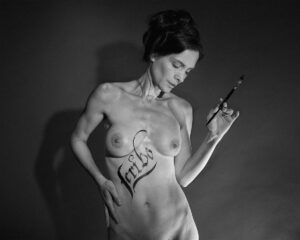
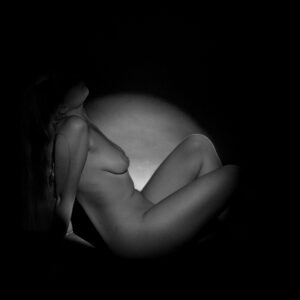
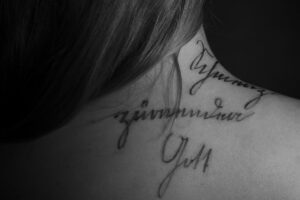
The photographic works of Artis Umbrae are developed in cycles that evolve over extended periods of time. While the individual series differ in subject, point of departure, and specific questions, they remain connected in many ways.
Certain fundamental decisions recur throughout the work: the reduction of space and props, the concentration on the human body, the use of light as a formative element, and the deliberate avoidance of illustrative or narrative approaches. The images do not seek to tell stories. They investigate. They do not provide answers, but open questions.
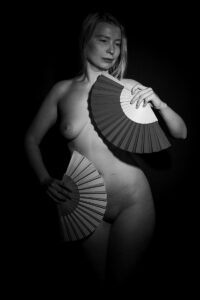
The human body appears not as an object of eroticism, but as a bearer of memory, language, projection, trace, or transformation. Nudity serves not as exposure, but as reduction. It frees the body from time, fashion, and social attribution, allowing it to become an open field of meaning.
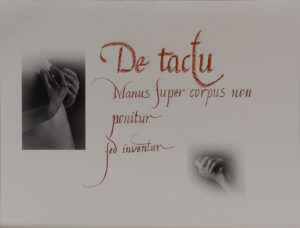
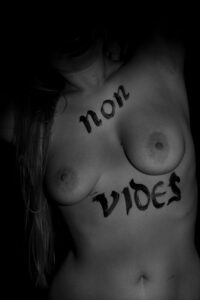
The photographic language itself remains deliberately restrained. Props are reduced to what is essential. Places lose their significance. Light does not create atmosphere, but form. Repetition and variation become part of the artistic process. Writing, shadow, gesture, and posture emerge as independent carriers of meaning.
Many motifs, questions, and formal decisions reappear across different cycles of work. The boundaries between the individual series therefore remain intentionally permeable. Each series may be understood as an independent investigation, yet together they represent different approaches to the same fundamental questions.
The Latin titles do not describe the outcome of a work. They designate the field of inquiry. They provide orientation without determining meaning.
Whether these works are ultimately perceived as several independent series or as different chapters of one larger, ongoing investigation is left to the judgment of the attentive viewer.
Photography and Culinary Art in Dialogue
Alongside the photographic series presented here, CONVIVIUM is emerging as an independent body of work. Its images are not conceived as completed endpoints, but as the starting point for a dialogue between two forms of artistic expression.
A theme is first interpreted through photography. A chef then encounters the images with their own distinctive approach and responds through taste, aroma, temperature, texture and form. The culinary interpretation does not illustrate the photographs; rather, it may take up their ideas, contradict them or open up new layers of meaning.
The large-format series comprise between five and twelve works and explore themes with a strong emotional, human or sensory dimension. CONVIVIUM will be continuously expanded with new bodies of work.
For the culinary development of the project, chefs with a distinctive creative approach as well as interested restaurants, hotels and cultural partners are expressly invited to collaborate.