
De Lupo Domito
The legend of the Wolf of Gubbio is one of the most famous stories of St. Francis of Assisi. For centuries, it is told as a story of reconciliation. A Wolf is threatening the residents of the city, tearing, livestock and people. Pope Francis greets him and talks to him and make peace. The Wolf waived his attacks, the residents of supplying him with food. Order is restored. The violence is overcome. The community has won.
So the story is told of the ordinary.
This series was born from the attempt to look at the same story from a different perspective. Not from the point of view of the Saint. Not from the point of view of the residents of Gubbio. But from the point of view of the wolf.
Because the longer I thought about the legend, the more a question to deal with, which is surprisingly uncommon started me. What is the meaning of this story is actually for the Wolf? What happens to a being who is suddenly asked to be something different than it was previously?
The Wolf is dealt with in the story, mostly as a Problem to be solved. As A Threat. As A Risk. As a perturbation of the order. But the Wolf does is ultimately nothing more than to be a Wolf. He hunts. He kills. He eats. You can find the cruel, but it is hard to argue that he is acting against his nature. On The Contrary. He meets precisely the role that the taking of his nature – or, if the medieval view seriously, God – intended for has.
It is just the actual voltage of this story for me. Francis is considered one of the great lovers of creation. He speaks with birds, praising the sun and the moon and to recognize in nature the expression of divine order. But why this no longer applies, of all things, when the Wolf suddenly? Why is a God-given nature a Problem, as soon as it is in conflict with human interests?
At this point, the legend leaves the medieval Umbria and is an issue that affects all of us. The philosopher David Hume, the difference between what is, and what it should be. The Wolf is a Wolf. This is a description, not a moral judgment. The man starts to rate. The man explains certain properties for desirable and the other is a problem.
Thomas Hobbes would agree, however, meekly. For him, the community can only work if individuals are willing to be part of your freedom. Without rules and limits threatens the famous bellum omnium contra omnes, the war of all against all. The residents of Gubbio probably had little interest in it, to be of philosophical arguments eat. Hobbes has a point. Community needs rules. The community is in need of adjustment.
But it is precisely here that the real question begins. How much adjustment is necessary in order for community work? And at what point the necessary adjustment of turns in the denial of your own being?
We are all aware of this conflict. Early on, we learn what pages of our personality are desirable and which are not. We learn when we are allowed to be loud and when to be silent. What needs to be accepted and what better to stay hidden. What are the properties of as virtues are valid and which are as a flaw. With time, many of these expectations are, of course, that hardly anyone asks where you are coming from.
An often-told parable describes a group of monkeys that live in an enclosure. About a pyramid hanging bananas. Whenever a monkey attempts to reach the banana, is sprayed the entire group with ice-cold water. After some time, the animals learn to avoid the climb. The connection is clear: if you are reaching for the bananas, ensures that all of the suffering.
Then one of the monkeys is replaced. The newcomer does not know the cold shower. Of course, he immediately tried to reach the banana. Before he can get far, he is prevented from doing so by the other monkeys in it. Not out of malice, but because they have learned that this behavior has unpleasant consequences.
After all the original monkeys are replaced. At the end, not a single animal is more in the enclosure has experienced the cold shower ever. Nevertheless, every newcomer is attacked as soon as he tries to climb the pyramid. The community takes on the task of punishment. The rule remains in place, although no-one knows their origin. None of the monkeys know why bananas are taboo. But they all know that you have to those who stop trying to reach you.
Whether this story actually has exactly doesn’t play a role. As a parable describes a phenomenon know people too well. Rules often for understandable reasons. But rules have a remarkable property: they survive often the reason for their emergence. A necessary measure, a habit is. From a habit, a Tradition. A Tradition is a matter of course. At some point is not to ask why a rule exists. It is easy to defend.
Maybe that is exactly what happens more often than we would like. Not every claim that is submitted to us, is really for the protection of the community. Some of the expectations exist only because they have always existed. Some of the standards to be defended even though no one can explain why. The cold shower has long since disappeared. The guardians of the rule remained.
From this Consideration was, finally, the series De Lupo Domito. The images tell the story of St. Francis. They tell the story of the wolf. Show the perception, evaluation, resistance, and retreat. Show the path of a system, which is increasingly confronted with expectations. The recurring circle of light was the Symbol of the forces that each person knows: societal expectations, religious beliefs, moral claims, traditions and norms. Sometimes they appear as a shelter. Sometimes, as a guide. Sometimes as a cage.
The series is aware of no response. It is neither an indictment of Francis of defense of the wolf. You tried to move the angle of view and to make the question visible, which extends far beyond this legend also.
Perhaps the real challenge of being human is to choose between freedom and customization. Maybe it is to recognize again and again, what adjustments are needed and what is only, therefore, continue to live, because no one has the courage to ask for your origin.
Or, to put it a little shorter and with the necessary level of sarcasm:
‘Be yourself. Unless there are others in the vicinity. Then there is Another.“
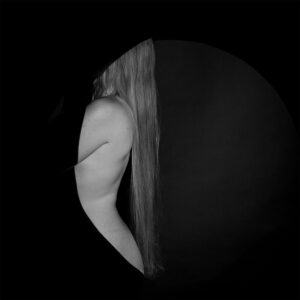



Agnitus
The title means ‘recognized’ or ‘perceived’. It is the Moment in which a being for the first time in the view. Nothing is decided yet. Yet there is no judgment, no claim and no consequence. Nevertheless, it has already changed something. Anyone who is seen, the anonymity, and is part of a relationship.
The circle of light can be understood in different ways. Maybe he is protective space. Maybe Halo. Maybe The Cage. Perhaps only the icon that attracts attention is always a limit. The figure is within this circle, but it remains to be seen whether you will be staying there voluntarily or already a little enclosed.
The picture marks the beginning of the story. Not the Moment of change, but the moment before. The last moment in which everything seems possible.
Iudicium
The title means ‘judgment’. Once a creature has been perceived, starts the assessment. From the mere will See a Lane is. From an observation of a write-up is.
The image is open, by whom this judgment proceeds. Perhaps the character from the outside will be considered and evaluated. Maybe you can look on. Maybe, the circle is a line that has been drawn by others. Maybe he is a border that has long been internalized.
The partially hidden view plays a Central role. It can be read as a resistance, as a vulnerability, as distrust, or as a silent Watch. The figure appears to be at the same time, visible and hidden. She shows eludes at the same moment.
How every judgment also, this picture says it may be more about the observer than on the observed.
Resistens
The title means ‘resisting’. It is the image that tells the most directly by the conflict. The raised Hand can be understood as a defense, as an attempt, an invisible border to push back. Similarly, you could, however, be a momentary movement, a Hesitation, or the attempt to understand something that cannot be gripped.
The figure is in a field of tension between the approach and rejection. It seems to be something that is out of the picture. Whether it is an external Power or internal conflict, remains open.
The circle loses its importance, and is almost part of the scenery. Perhaps it is because the actual fight is not happening outside of the figure, but in your self. The image is not a decision. It shows the moment in which the decision is not yet fallen.
Domitus
The title means ‘tamed’. However, the image does not answer the question of whether this taming is successful, or whether they ever took place.
The seated figure seems quiet at first glance. You can see it as acceptance. You can exhaustion to see. You can see retreat. Similarly, the image could indicate an inner space, in the figure withdrew, in order to preserve something that can’t be reached from the outside.
The Light behind the body plays a double role. He can be a reminder. Origin. Freedom. Hope. Maybe he is just the trace of a previous condition is not fully accessible.
The image forms the conclusion to the series, without drawing a line. The question is whether the Wolf has found his peace, or whether he has simply learned to live with the cage not answered. This is precisely why the story remains open.
Maybe you ends here.
Maybe it starts here in the first place.