
On photography, art, and the loss of seeing
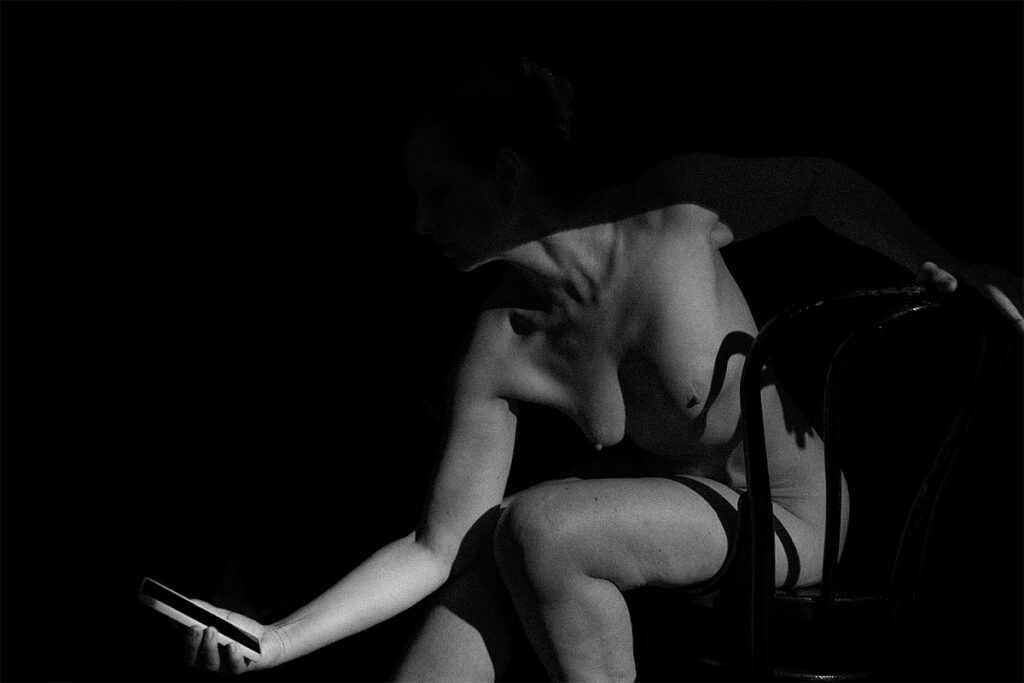
We live in a time in which images are everywhere, and yet seeing itself has become rarer. Never before has the world been so visible, and never before has it been looked at so fleetingly. Perhaps art today begins precisely at the point where an image interrupts the stream of the passing and compels the gaze to remain longer than the present age intends.
The question of whether photography is art belongs to those questions that appear simple at first glance and, upon closer examination, lose the very ground on which they stand. It presupposes that we know what art is in the first place. And therein already lies the first error. There is no single, timeless concept of art valid for all epochs and contexts. There are concepts of art — in the plural: historical, social, institutional, philosophical, economic, and not least subjective. Whoever asks whether photography is art is often, perhaps unconsciously, posing a question whose foundation has already slipped away. Perhaps, then, the real question is another one entirely: what has become of our gaze?
For while the debate over whether photography can be considered art returns at regular intervals like a recurring outbreak of herpes, something far more fundamental has changed: the way we see. Today, billions of images are produced every single day. Almost everyone carries a camera with them, embedded in a device that is simultaneously a means of communication, an archive, a stage, a mirror, and a marketplace. The technical democratisation of photography is complete. Never has it been easier to produce an image. Never has it been harder to truly see. This is not a culturally pessimistic lament. It is an observation. Photography has moved from being a rare event to becoming a constant background hum. Once, the image was the exception; today it is the environment, and every environment shapes perception.
The German word Kunst already carries its origin within itself. It reaches back through Middle High German and Old High German and is closely related to the verb können — to be able. Its deeper linguistic root lies in the Germanic stem kunnan, signifying knowledge, understanding, and capability. In its original sense, art was not first and foremost the aesthetic object, but conscious knowledge, acquired skill, a capacity grounded in insight and mastery. Within this older understanding, the question of whether photography can be art is almost absurd. Of course photography is art — provided it presupposes skill. And yet this is already where the reduction begins.
An amateur photographer once told me that photography could not be art because it merely depended on capturing the right moment. Merely. A remarkable word. As if the moment were a product of chance, as if it simply fell like a leaf from a tree directly into the photographer’s hands. My experience is very different. An image often begins months before the shutter is released. It begins with an idea, with a thought that cannot yet be fully articulated, with an inner image that initially appears only as atmosphere. Then begins a process of maturation. Themes accumulate: literature, architecture, social observation, memory, historical image traditions, archetypal forms. A cycle does not begin in the studio. It begins in thought.
What follows is conception: light design, space, backgrounds, body axes, expression, instruction of the model, direction of gaze, symbolic layering, pose, the tension between visibility and withdrawal. Only when all of this is in place, when the structure of the image has already been prepared, does that famous “right moment” arrive. Yet even that moment is still not the finished work. What follows is often another, frequently hours-long artistic process: post-production. Tonal values, contrasts, grain, light direction, local brightening and compression, the precise handling of shadow, every decision in dodge and burn, every curve, every crop, every nuance of the final toning — these are all deliberate aesthetic decisions. Post-production is not correction. It is an integral part of the artistic process. The moment is never the origin. It is the culmination. Whoever isolates it mistakes the summit for the mountain range.
The scale of this transformation can hardly be overstated. Today, within a matter of minutes, more images are created than in the entire nineteenth century. Within a few days, more photographs are produced than once emerged across entire photographic eras. The production of images has grown exponentially, while the time we grant them has almost collapsed. The smartphone has not merely changed the availability of images. It has changed our habits of seeing. This is the deeper cultural rupture. The device itself is not the decisive factor; what matters is the rhythm it imposes upon our gaze. We no longer look. We scan. We do not linger. We swipe.
The viewing time of an image on platforms such as Instagram often lies in the range of seconds, sometimes even less — not minutes. An image is no longer contemplated. It simply passes. This change is profound, because perception is always also a function of time. An image that receives only a second of attention is not read. It is merely registered. This applies all the more to works built upon layering, symbolism, shadow spaces, and slow unfolding. Many photographic works only begin to speak after several seconds. A shadow opens. A form becomes legible only at second glance. A body is no longer merely body, but sign. A line becomes architecture. Within the logic of scrolling, there is no room for this. The smartphone has transformed the gaze into a motor function. Swiping is the opposite of dwelling.
Even more deeply, the devices themselves impose their own technical logic. Most phone images are produced within the wide-angle range. This alters perspective, spatial feeling, and proportion. Faces, bodies, and rooms are perceived subtly differently through this optical regime. This distortion increasingly shapes even our natural seeing. We begin to read the world as the device presents it to us. The camera no longer follows our gaze. Our gaze follows the camera.
A famous experiment demonstrates how deeply perception depends on context. A world-renowned violinist once played technically and artistically demanding works anonymously in a subway station. Hardly anyone stopped. In the concert hall, people pay substantial sums to hear him. The music had not changed. The context had. The same applies to photography. An image on a phone screen, an image in a feed, an image as a large-format baryta print in a gallery — these are not merely different forms of presentation. They are different spaces of perception. A work never exists in isolation. It lives in the interplay of place, material, framing, light, context, and expectation. This is not a weakness of art. It is part of its reality.
Here things become somewhat uncomfortable — and for precisely that reason, interesting. The price tag is an essential part of artistic classification. Not because price creates quality, but because price creates expectation. Price is a semantic signal. It tells the viewer not only what something costs, but also how it is to be read. A work priced at seventy-nine euros is looked at differently from a limited edition with certificate, signature, blind embossing, and a four-figure price. This is psychological and institutional reality. The price tag functions like a silent curator. It signals seriousness, rarity, collectability, market position, and ambition.
Another contradiction of our age lies in the devaluation of photographic craft. The tool has become accessible. The gaze has not. This is a social misunderstanding. The usability of a tool is confused with mastery. That someone can operate a camera does not mean they understand light. That someone can release a shutter does not mean they can think an image. That someone produces images does not mean they can see. Craft has not become obsolete. It has become invisible. And precisely this invisibility of skill is one of the marks of true mastery.
Perhaps, then, the original question is wrongly framed. Not: Is photography art? But rather: What do we expect from art? If art is a space in which perception is condensed, slowed, sharpened, or unsettled, then photography is not merely capable of this — it is uniquely predestined for it. Precisely because it operates at the boundary between reality and construction. Precisely because it unites documentary claim with conceptual freedom. Precisely because it is omnipresent in our age.
Perhaps the real challenge today is not to legitimise photography as art. Perhaps it lies in giving depth back to seeing. For in a world of permanent images, production is not the problem. The problem is the speed of the gaze. Art perhaps begins where an image forces us to remain longer than the rhythm of our present allows. Where swiping fails. Where fleeting registration becomes seeing again. That is where photography begins for me. And perhaps art as well.