
The Beauty of Imperfection
On Gustav Klimt, the idealisation of the human figure, and the question of what makes a portrait beautiful.
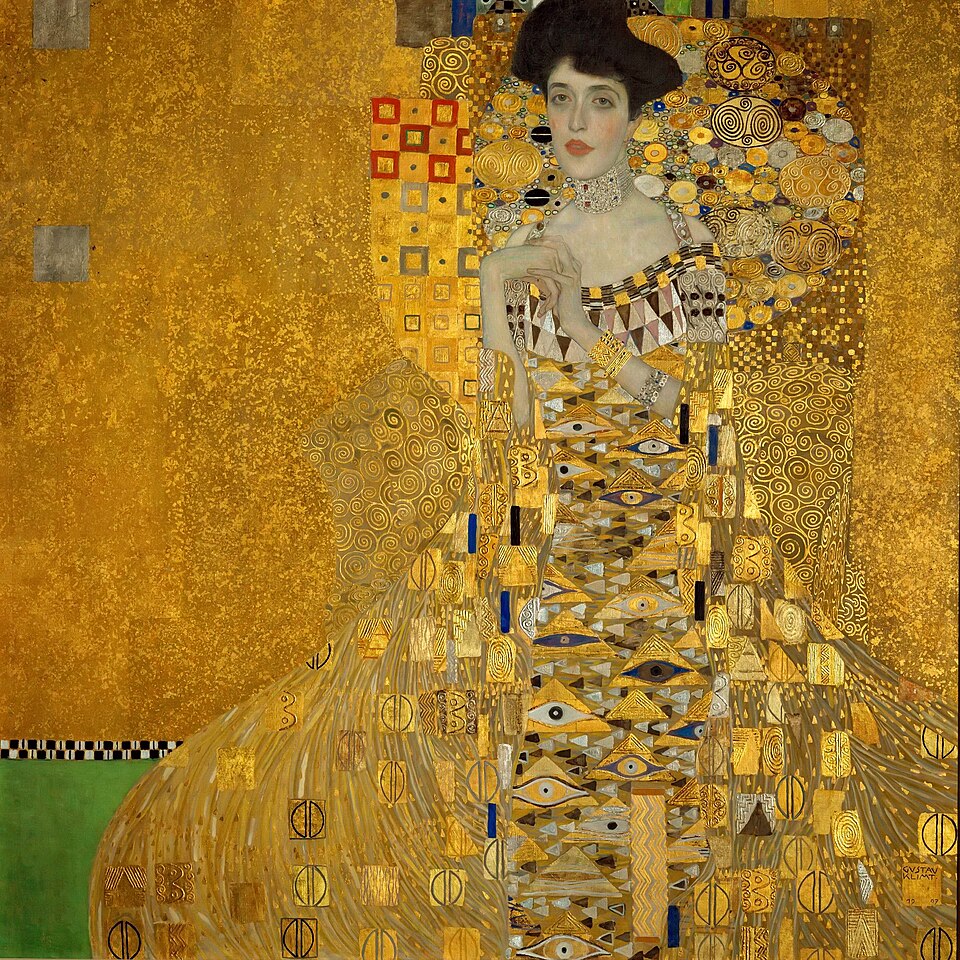
Over the years, I have seen Gustav Klimt’s portrait of Adele Bloch-Bauer countless times. Hardly surprising, given how extensively I engage with art history, as the esteemed reader will surely have noticed by now. And, as so often happens with works of art that have long since become familiar to us, there comes a moment when something catches our attention and refuses to let go. In this case, it was the hands. I had noticed their unusual position several times before. Adele holds them clasped in front of her chest, almost tensely, certainly not in the way one would expect in a formal society portrait. Yet I had never attached any particular significance to it. Until recently, when I came across a video offering a possible explanation: Adele Bloch-Bauer apparently had a deformed finger, which Klimt concealed through this unusual arrangement of her hands.
This aroused my curiosity. I began researching the matter and discovered that the story does indeed appear in the art-historical commentary provided by the Neue Galerie in New York, where the painting is now housed. According to the museum, Adele’s hand position conceals a deformity of her right middle finger. But this immediately raised another question: Why had Klimt not simply painted the finger differently? After all, he was a painter. He could easily have depicted a perfectly ordinary, anatomically correct hand. Art history is full of examples of artists portraying their patrons as more beautiful, younger, more imposing or more dignified than they probably were in reality. Why, then, this peculiar pose? We do not know whether Klimt intended to make a deliberate psychological statement. Nor do we know what conversations took place between him and Adele about her hands. But we can see the result: an unusual gesture that conceals a physical characteristic while drawing our attention precisely because of its peculiarity. And this brings us to a question that also concerns me as a photographer: What exactly is an imperfection? And who decides that it needs to be removed?
When Kings Were Painted More Beautifully
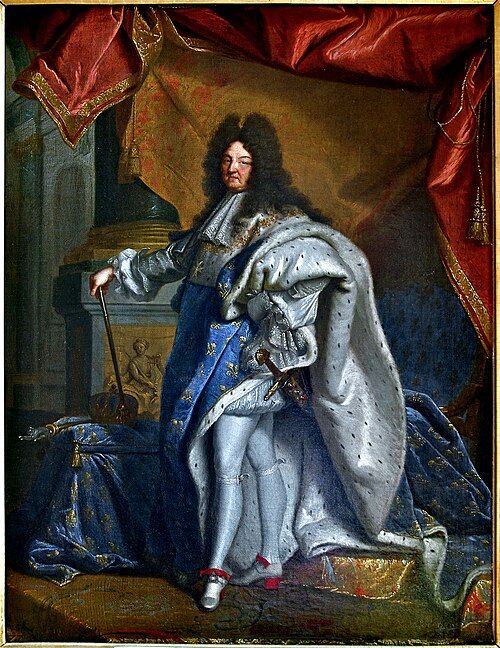
A portrait has never been merely the most accurate possible representation of a person. It has always served a social function as well. It could demonstrate power, display wealth, convey dignity or embody a particular ideal of beauty. This is especially evident in court portraiture of the seventeenth and eighteenth centuries. Consider Hyacinthe Rigaud’s famous portrait of Louis XIV from 1701. The French king was 63 years old at the time, a quite respectable age by the standards of his day. Nevertheless, he presents himself with remarkably elegant legs, in a pose more suggestive of a young dancer. Louis had indeed been a passionate dancer in his youth. Here, Rigaud combines the recognisable features of an ageing monarch with an idealised physical appearance and all the insignia of royal power. The painting therefore does not simply show Louis XIV. It shows the idea of kingship embodied by Louis XIV.
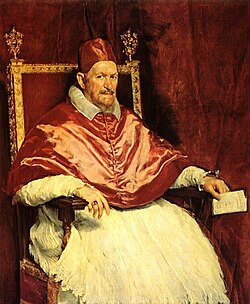
Painters enjoyed considerable freedom in this respect. They could alter proportions, eliminate skin imperfections, harmonise facial features or make the body appear more flattering through posture and clothing. At the same time, they had to ensure that their patrons remained recognisable. A king who no longer looked anything like the king would hardly have been useful as an official portrait. Yet not all artists followed the same approach. Diego Velázquez portrayed Pope Innocent X around 1650 with remarkable psychological presence. His face appears stern, almost suspicious, and certainly not softened according to some general ideal of beauty. Francisco de Goya, meanwhile, depicted the family of Charles IV around 1800 with a directness that later viewers sometimes interpreted as concealed mockery. Whether Goya actually intended such criticism remains disputed. Both examples demonstrate that a representative portrait did not necessarily have to be flattering. The individuality of the sitter could contribute just as much to the painting’s impact as idealisation. It becomes clear, then, that portraiture has never been solely about resemblance. It has also been about deciding which characteristics of a person should be made visible and which were better left concealed.
When Does a Distinctive Feature Become a Flaw?
Marilyn Monroe had a prominent beauty mark on her face. Cindy Crawford became instantly recognisable, partly because of her distinctive mole near her upper lip. Both features became part of their public image, almost trademarks. What would have happened if an overzealous retoucher had removed these little irregularities? Their faces would probably have appeared smoother and more symmetrical. But would they have been more beautiful?
Recently, while watching the Italian television programme Ballando con le stelle, I noticed the Ukrainian-born actress Anna Safroncik. She has a striking feature on her upper lip. Whether it is a birthmark, I do not know. And, to be frank, that is entirely irrelevant to my point. To me, this feature is part of her appearance. It gives her face character and makes it unmistakable. I would almost consider it a loss if someone decided to retouch it away. But the underlying question goes deeper: Why do we describe such characteristics as imperfections in the first place? A mole is simply a mole. A scar is a scar, a wrinkle a wrinkle. Only when we measure these features against a particular ideal of beauty do they become supposed flaws.
Beauty ideals, however, are not laws of nature. They change with social attitudes, cultural traditions and historical developments. A fuller figure could once symbolise wealth and good health, while in other periods slenderness became the desired ideal. Pale skin could signify an aristocratic lifestyle, while tanned skin later became associated with leisure and vitality. Age, facial proportions and the visible traces of life have likewise been judged differently at different times. What we perceive as beautiful is therefore by no means exclusively an immediate reaction to physical characteristics. We have learned to regard certain features as attractive and others as undesirable.
Yet beauty and individuality are not the same thing. We recognise people precisely through their distinctive characteristics: an asymmetrical smile, a characteristic nose, the wrinkles around their eyes or an unusual movement of the mouth. If we eliminate all these features, we may end up with a face that conforms to a particular ideal. But in doing so, we may lose exactly what makes that person interesting.
The Camera and Reality
When photography emerged in the nineteenth century, it seemed to possess one decisive advantage over painting: it could reproduce reality with a degree of accuracy previously unknown. No longer did an artist’s hand have to draw or paint a face. Light itself left its traces on a sensitive surface. Yet this gave rise to a misconception that persists to this day: the belief that a photograph shows reality exactly as it is.
The very choice of framing is a decision. Perspective changes the effect of a face. Focal length influences the representation of space. Light can deepen or soften wrinkles, emphasise skin textures or make them recede. A simple change in posture is often enough to make the same person appear completely different. I can photograph someone using harsh side lighting and reveal every irregularity in their skin. Or I can photograph the same person with soft frontal lighting and make those very textures largely disappear. Both photographs show the same person. Both are technically correct. Yet they convey entirely different impressions. Which one, then, is the true image?
In my commissioned photography, I encounter this question regularly. Many women have very precise ideas about which aspects of their bodies they do not wish to see in photographs. These may include wrinkles, skin irregularities, body proportions or cellulite. Sometimes these are details I would barely notice myself, but which carry considerable significance for the woman concerned. My first approach is to address such wishes through traditional photographic means: lighting, perspective and posing. It is remarkable how much can be achieved this way. If that is not enough, careful digital retouching may also be appropriate. I see no fundamental contradiction between this and photographic truthfulness. Someone commissioning a portrait is hardly asking for a medical record of their skin. The task is to create an image in which the person recognises themselves and which they enjoy looking at.
Nevertheless, the question always arises as to how far such alterations should go. If I remove every wrinkle, fundamentally change body proportions and eliminate individual features, I may create someone who conforms to an ideal of beauty but bears little resemblance to the person who stood before my camera. Recognisability is therefore an important standard for me. But perhaps it is not enough on its own. Someone may recognise themselves perfectly well in a photograph and still feel that the image no longer represents who they are.
The Drama of Imperfection
The Polish artist Andrzej Dragan takes an almost opposite approach. His portraits have fascinated me for years. They are characterised by extreme contrasts, a sculptural emphasis on skin textures and an almost dramatic presence of the people depicted. Wrinkles become deep furrows, skin surfaces turn into landscapes. The faces appear almost sculptural. What conventional beauty retouching would normally soften or remove is brought into sharp relief.
What fascinates me is not so much the spectacular processing as the extraordinary presence and drama of these images. I would love to create portraits like these myself. I must admit, however, that I hardly dare approach someone with such a proposal. The invitation alone could be misunderstood. What I perceive as a face full of character and expression might be interpreted by the person concerned as a reference to their wrinkles, their age or supposed physical shortcomings. Yet Dragan’s representation is no more objective than a softly retouched beauty portrait. Quite the contrary: his visual language thrives on exaggeration. Contrasts and textures are deliberately intensified to produce a particular effect. Beauty retouching idealises by softening. Dragan dramatises by emphasising. Both are artistic interpretations of the same reality.
And yet an interesting question arises: Why do we perceive a face in which age and the traces of life are so clearly visible as extraordinarily expressive, while we often try to conceal those very traces in an ordinary portrait? Perhaps the answer lies in the fact that we approach an artistic portrait with different expectations. We are not necessarily looking for beauty in the conventional sense. We are looking for expression, intensity, personality or a story told by the image. A face does not have to be flawless to fascinate us. Sometimes it is precisely its irregularities that give it its particular power.
Beauty as a Goal – Expression as a Goal
In my artistic photography under the name Artis Umbrae, I pursue different objectives from those of my commissioned work. The primary aim is not to portray a person in the most flattering possible way. The body becomes a means of expressing thoughts, emotions and stories. Posture, tension, movement and gesture can convey meaning without the need for an elaborate narrative. Light and shadow are not primarily used to conceal physical characteristics, but to create a particular effect.
In this context, many conventional beauty criteria lose their importance. I am not interested in whether a body conforms to idealised proportions. I am interested in whether it possesses the expressive potential required for my artistic concept. A wrinkle can be just as important as the tension of a muscle. An unusual posture can tell more than a perfectly rehearsed pose. A face does not need to smile to be beautiful, and a body does not need to conform to prevailing ideals to produce a powerful aesthetic effect. That does not mean beauty plays no role in my artistic work. But it is not necessarily the goal. It may emerge without my deliberately seeking it.
This is where I see a fundamental difference between conventional commissioned photography and my independent artistic work. In the former, the priority is the sitter’s wish to recognise themselves in an image they regard positively. In the latter, my artistic vision takes centre stage, and I collaborate with models to bring that vision to life. Both require photographic skill, sensitivity and creative decisions. But the criteria by which I judge the results are not the same.
What Remains When We Remove Imperfection?
Today, we possess image-editing capabilities that previous generations could scarcely have imagined. Skin can be smoothed with a few clicks, body shapes altered, facial features harmonised and supposed flaws removed. Artificial intelligence can now even generate faces and bodies that have never existed. Technically, this is impressive. But what do we actually gain?
If we bring every face closer to the same proportions, smooth every skin texture and eliminate every asymmetry, we remove more than supposed imperfections. We may also eliminate the very characteristics that make people unmistakable. Yet it would be too simplistic to reject all retouching on principle. A flattering portrait can bring someone joy. It may help them see themselves in a way they had not previously recognised. That does not necessarily make it less valuable than an uncompromising representation.
For me, the decisive question is what purpose the alteration serves. Is it intended to remove a temporary skin blemish? To help someone feel comfortable with their image? To strengthen an artistic statement? Or does it merely follow an ideal of beauty that we have accepted so unquestioningly that we barely notice it anymore? Perhaps, from time to time, we should ask not what could be improved about a face, but what we might lose by improving it.
And so I return to Gustav Klimt and Adele Bloch-Bauer. Klimt could have painted the finger differently. He could have made it disappear without our ever knowing. Instead, he chose an unusual position of the hands that conceals a physical characteristic while becoming an unmistakable element of the painting. Whether this decision arose out of consideration for Adele, compositional concerns or a combination of both, we cannot know with certainty. But it demonstrates how closely the representation of a person is bound to the decisions of the artist.
A portrait does not have to show every physical characteristic. Nor does it necessarily have to eliminate them. Above all, it does not automatically become better simply because the person depicted moves closer to a general ideal of beauty. Perhaps the real art lies in recognising which characteristics make a person unmistakable – and which of them are essential to the image. For sometimes, what we call imperfection is precisely what makes a person entirely unique.