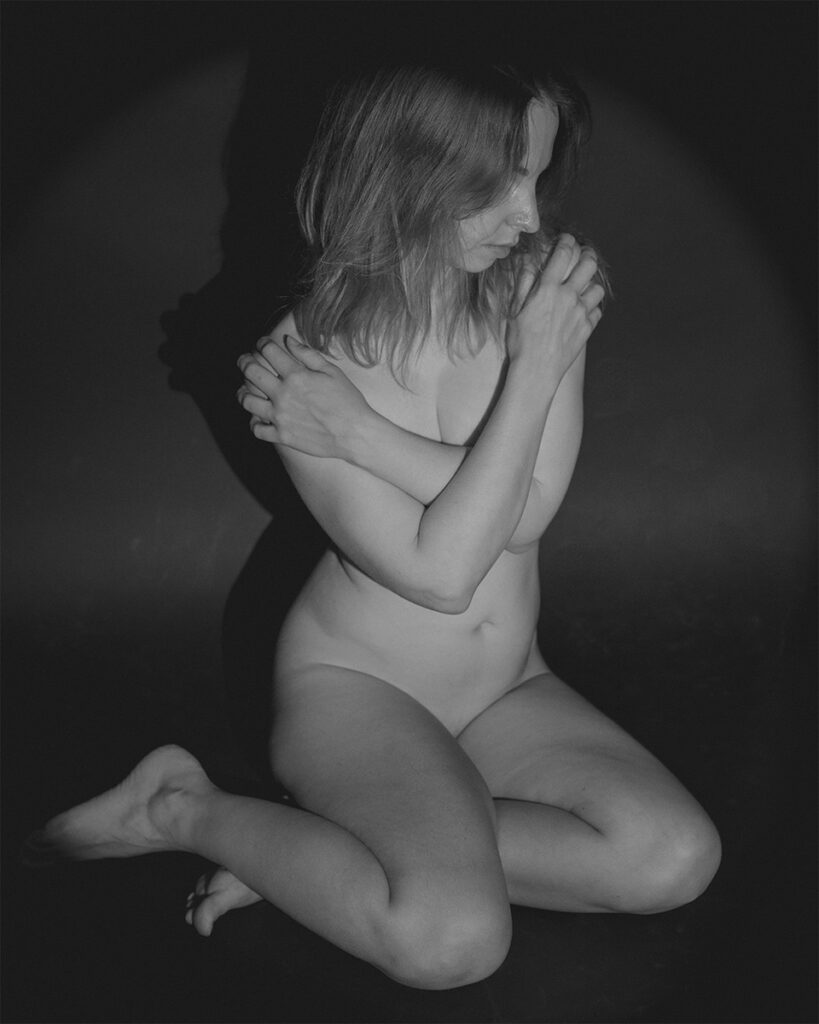
Photography and Culinary Art in Dialogue
When Images Encounter Another Art Form
The idea for CONVIVIUM emerged while I was listening to Modest Mussorgsky’s Pictures at an Exhibition. In this work, music responds to images. It does not simply describe the artworks; rather, it translates their moods, movements and ideas into another artistic medium.
This gave rise to a question:
What happens when it is not music that responds to images, but food?
Cooking, dining and the culture of enjoyment have accompanied me for many years. What interests me is not only taste or technical perfection, but also the interplay of aromas, textures, temperatures, colours and memories. A dish can surprise, seduce, unsettle, comfort or provoke resistance. Like an image, it can awaken thoughts and emotions.
From this connection emerged CONVIVIUM: a body of work in which photographic series become the starting point for independent culinary interpretations.
The culinary response is not intended merely to illustrate what is visible. An image of anger does not necessarily call for heaviness or heat. Gluttony does not have to appear on the plate as abundance. A culinary interpretation may take up one aspect of the photographic interpretation, contradict it, reveal something hidden or open an entirely new line of thought.
The photographer interprets a subject through images. A chef encounters these images and responds through another medium: taste, aroma, temperature, texture, form and consistency.
What emerges is not a culinary accompaniment to photography, but another independent layer of the work.
A Possible Encounter
Imagine entering a restaurant or an exceptional venue. Large-format photographs are already present in the space. They are neither decoration nor a mere backdrop for a menu. They are the starting point of the evening.
At the beginning, each guest receives a plate conceived as an amuse-bouche. It may contain a series of small culinary impulses – perhaps as many as there are photographs in the series. Each bite offers a first sensory approach: a flavour, a texture, a temperature or an unexpected contrast.
The guests move among the photographs, spend time with them, talk to one another and meet the artist. Even before the individual works are explained, images and flavours begin to enter into a relationship.
Then the menu begins.
Before each course, the artist speaks about the corresponding image: its underlying theme, the photographic interpretation, the body language, the use of light and shadow, and the ideas that led to its creation.
The chef then presents the culinary response. Perhaps it takes up an idea from the image. Perhaps the culinary interpretation contradicts the photographic one. Perhaps it reveals something that the artist himself had not recognised.
Then the course is served.
The image remains present in the room. The words are allowed to settle. Taste, aroma, temperature and texture are added. Looking becomes an experience that brings together several senses and more than one artistic signature.
Yet this is only one possible form of CONVIVIUM.
Perhaps the evening begins with an amuse-bouche. Perhaps the images are encountered in a different order. A chef may choose not to create a traditional sequence of courses, but instead develop small dishes, unexpected interventions or an entirely new dramaturgy. The culinary interpretation may even change the way in which the photographs are presented.
CONVIVIUM is not a fixed format.
Each collaboration is free to find its own form. The chef’s ideas and artistic signature are not an addition to the photographs, but the second independent voice of CONVIVIUM.
A genuine dialogue can arise only when one side does not merely repeat what the other has already said.
The Photographic Series
Each series within CONVIVIUM consists of approximately five to twelve photographic works. The images are created for large-format presentation, generally at a height or width of more than one metre.
This scale is not merely a question of visual impact. The photographs are intended to be physically present in the space. They should remain perceptible from a distance while revealing details, structures and further layers of meaning when viewed more closely.
The subjects have a strong emotional, human or sensory dimension. They explore experiences, contradictions, desires, conflicts and forces that act within us.
It is precisely this openness that makes culinary interpretation possible.
The photographs do not prescribe flavours and do not demand a literal translation. They create a space of resonance. A chef may respond to the atmosphere of an entire series, interpret individual images or develop a dramaturgy that unfolds over several courses.
The photographs are the first artistic interpretation of a theme. The chef therefore does not encounter a neutral concept, but an existing personal interpretation expressed through photography – and develops a new and independent response.
This creates a sequence of perspectives:
A theme. A photographic interpretation. A culinary response. The guest’s personal experience.
A Growing Body of Work
CONVIVIUM begins with a first photographic series, but from the outset it is conceived as a growing body of work.
Unlike my other photographic work cycles, to which I currently add one to three new series each month, every series created for CONVIVIUM requires a different form of development. Its subject must not only work photographically; it must also remain open and multifaceted enough to offer space for another art form.
Several new series each year will gradually expand this spectrum. Each will open different emotional, visual and culinary possibilities. In this way, CONVIVIUM can be interpreted again and again and developed in collaboration with different chefs, restaurants, hotels, galleries and cultural venues.
The photographic works are created first. Within CONVIVIUM, however, they deliberately remain open.
Because the images are not the conclusion.
They are an invitation to respond.
The CONVIVIUM Dialogue
The photographic series form the foundation. Their culinary development, however, can arise only through collaboration with people who understand cuisine not merely as a craft or a service, but as an independent form of expression.
For future projects, I am looking for chefs who are willing to encounter the photographs through their own artistic signature – not by reproducing what is visible on the plate, and not by developing a predictable dish based on a photographic subject.
A culinary interpretation may take up the images, contradict them, continue their ideas or reveal aspects that I myself had not recognised.
CONVIVIUM is therefore also intended for restaurants, hotels, galleries and cultural venues that wish not merely to present photography and culinary art side by side, but to develop a shared experience from their encounter.
The specific form deliberately remains open. Possibilities include multi-course menus, exhibitions accompanied by culinary interpretations, exhibition openings featuring specially created small dishes, or entirely new formats that emerge only through collaboration.
Every partnership brings different spaces, people and ideas. For this reason, potential partners are not presented with a finished event format.
CONVIVIUM provides the artistic foundation – its specific form is created together.
If you are a chef or represent a restaurant, hotel, gallery or cultural institution and are interested in a collaboration, the following page provides further information about the concept, possible event formats and the framework for working together.
The Series
The photographic series form the first voice of CONVIVIUM. Each has its own visual language and opens a new space for culinary interpretation.
The following introductions provide a concise overview of the scope, emotional atmosphere and thematic tensions of each series. They are not intended as guidelines for culinary realisation. Every chef is invited to encounter the images through their own perception and respond with their own artistic signature.
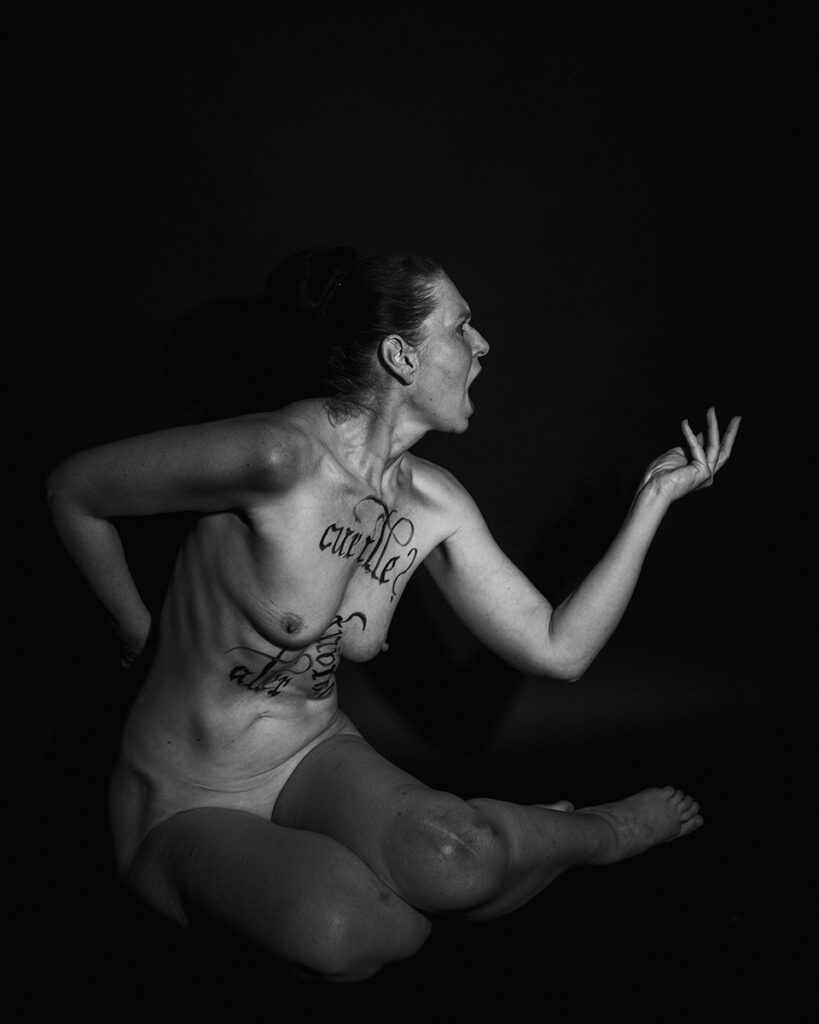
SEPTEM VITIA CAPITALIA
The Seven Deadly Sins
7 photographic works · 7 possible courses
Desire · Excess · Pride · Envy · Wrath · Possession · Inner Emptiness
The seven deadly sins appear not as moral judgements, but as human forces and inner states. Body, gesture and Latin script transform pride, greed, lust, envy, gluttony, wrath and acedia into seven distinct visual spaces. The series invites a culinary response: seven photographs as the starting point for seven possible courses – from the first stirrings of desire to inner emptiness.
Status of the culinary interpretation: Open
SILENTIUM
The Weight of the Unspoken
9 photographic works · 9 possible courses
Fear · Shame · Protection · Love · Consent · Guilt · Punishment · Coercion · Intimacy
Silence is not the absence of communication. It can arise from fear or shame, protect another person, withhold words out of love, or be interpreted as consent. It can conceal guilt, become a punishment, or be imposed through power. And sometimes silence is an expression of profound intimacy, because words are no longer necessary. The series invites a culinary interpretation: nine photographs as the starting point for nine courses – from the oppressive silence of fear to the quiet closeness between two people.
Culinary interpretation: open