Welcome to Cogitationes, thoughts from the studio of Artis Umbrae.
This is neither a blog in the conventional sense nor a diary, even though traces of both may occasionally shimmer through. It is a space for thought, a studio in words, at times a travel journal, at times a dissecting table.
This journal opens a view into the universe of Artis Umbrae — into those mental spaces from which images, series and questions emerge. At the same time, it turns the gaze of that universe back onto the world: onto art, history, society, and the contradictions of our present.
Here I write about my own perspective on art, about art-historical references and sources of inspiration, about light, body, space, and those places that at some point find their way back into my work as image. Series and individual works are introduced here, sometimes explained, sometimes deliberately left open. Social and cultural questions also have their place — though only where they touch, challenge or inspire my work.
I write neither as an art historian nor as a sociologist. Yet these reflections are not meant to float freely in abstraction; they remain anchored in history, in the work itself, and in observation.
A small warning in advance:
I have never faked sarcasm.
Irony, sarcasm, and occasionally a certain degree of cynicism are not external stylistic devices here; they are part of the original material. Anyone hoping for agreeable surfaces, softened formulations, or market-friendly artistic platitudes may well be disappointed.
For me, art rarely begins with the image alone. More often, it begins where perception collides with contradiction. If these texts occasionally reveal more about the viewer’s gaze than about the work itself, that is no accident.
Subscribe
If you would like to receive new essays, work series, spaces of thought, and the occasional imposition of contemporary reality directly, you are welcome to subscribe to Cogitationes.
As a rule, a newsletter is sent out once a month, featuring the latest texts, notes on new series, and selected reflections from the Artis Umbrae universe.
The newsletter is published bilingually in German and English and is intended as a shared journal for all language spaces in which Artis Umbrae is present. The individual essays on the website itself are available in all published language versions.
New texts emerge with an irregular regularity — the monthly dispatch simply ensures that nothing slips past unnoticed.
Share
Public sharing buttons have been omitted deliberately.
Some texts and visual worlds unfold their effect more fully in quiet reading than in the rapid traffic of social media. If you wish to pass a text on, please do so intentionally — by link, message, or in personal conversation.
Thoughts may travel.
Just preferably not algorithmically.
To the essays
A work of art can cross boundaries—or people can claim that it does. The standards used to judge it are ...
IV. The Photographer’s Own Gaze – Nude Photography, Consent and the Sacred After films, images and novels, the question has ...
III. How Much Violence May Art Depict? In my historical crime novels, there is a chapter I spent a long ...
II. The Body as an Affront In art, the body is painted, drawn, photographed, sculpted and staged. And again and ...
I. A sculptor, a girl—and the word art My Cogitationes rarely begin with a finished thesis. Usually, all it takes ...
Why the most unremarkable photographs in the modelling world are genuinely useful – and why they have never interested me ...
On self-perception, artistic freedom, and the question of whom a portrait needs to please. A Third Question for Gustav Klimt ...
On Gustav Klimt, the mosaics of Ravenna, and the art of drawing inspiration from the past without copying it. A ...
The Beauty of Imperfection On Gustav Klimt, the idealisation of the human figure, and the question of what makes a ...
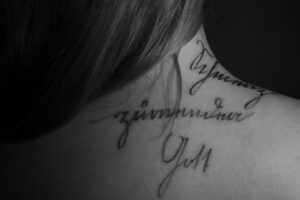
Yesterday I visited the Lukas Feichtner Gallery again. I like going there because a visit is never just a quick ...
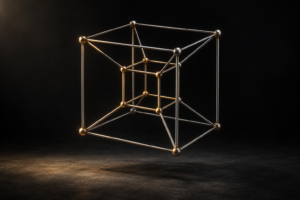
Salvador Dalí’s painting can be found online by searching for “Crucifixion (Corpus Hypercubus).” The Metropolitan Museum of Art in New ...
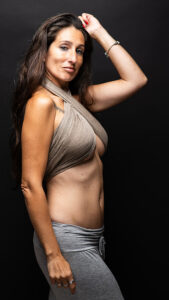
There are activities people genuinely look forward to: dinner with friends, a concert, a lovely holiday, or an afternoon with ...
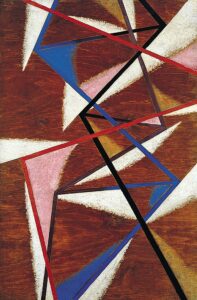
On geometric order, social utopias, and what photography can learn from an art movement more than a century old. Reality ...
On shifting perspectives in art, religious outrage, and the question of who actually deserves a monument. Today, I stumbled across ...
In the first part, I described how the human body can become a landscape. How a back turns into a ...
Low-Key Bodyscape – Part I: When the Body Becomes a Landscape Today, my photographic passion belongs to Artis Umbrae. It ...
On Michelle Henning’s “A Dirty History of Photography” and the invisible foundations of photographic beauty. Photography is regarded as the ...
Why Some People Tell More in Front of the Camera Than Others Sometimes the inspiration for an article comes from ...
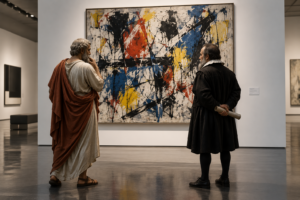
At the end of the first part, Plato and Aristotle were already sitting at my imaginary table. Plato had given ...
A few days ago, I was back in Acquasparta, a small Umbrian town of barely more than five thousand inhabitants, ...
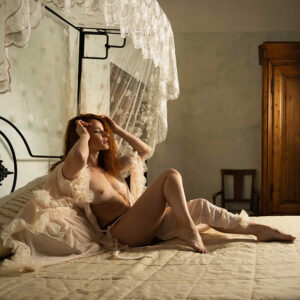
Part II – Sensuality Is Not a Matter of How Many Buttons Are Undone The first part explored the boudoir ...
Part I – From a Private Room to a Personal Image I have repeatedly written about boudoir photography. About its ...

A woman has herself photographed nude. She has spent years fighting her body, speaks of an eating disorder and describes ...
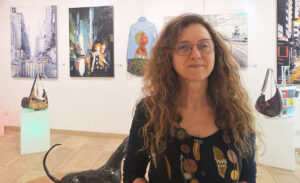
An unexpected gallery visit, a shared fascination with retro aesthetics, and a thoroughly enjoyable conversation with an artist. While my ...
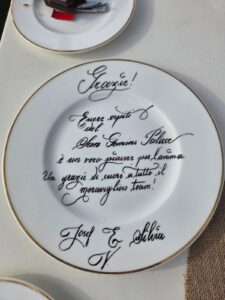
Part II: When Did Things Stop Having to Be Beautiful? A few years ago, after a long day’s work, I ...
Part I: When Did Handwriting Stop Having to Be Beautiful? There are certain things about which I apparently belong to ...
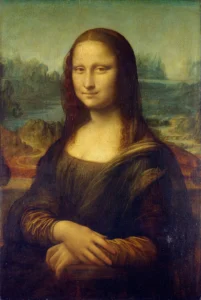
How tools change – while artistic working methods survive for centuries There are works of art we believe we know ...
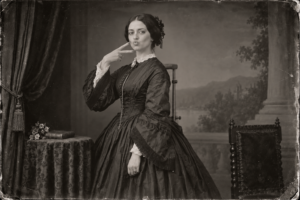
Part II – The Pose Has Wi-Fi Now Part I examined the notion that people did not yet pose in ...
Part I – The History of Careful Staging A dear friend recently told me that she could not make much ...
On political language, shifting boundaries and the creation of enemy images There are open calls whose themes one finds interesting, ...

On presence, borrowed poses and the work behind the image I came across a story about Marilyn Monroe. A journalist, ...
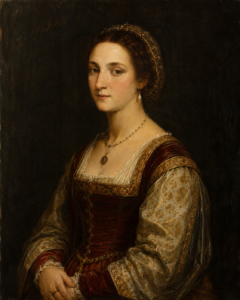
Part IV: Who Decides What Remains?In the first part of this series, we stood before Filippo Lippi in Spoleto and ...
Part III: And Then Suddenly Everything Was Art At some point in the twentieth century, visiting a museum became dangerous ...
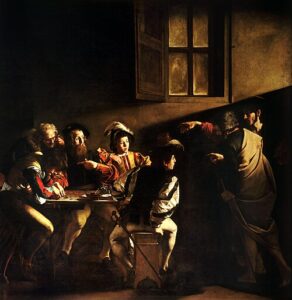
On Otto Mühl and the question of when artist and work can no longer be separated On 10 September, the ...
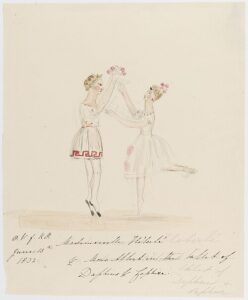
On art, fame, and the mistaken belief that quality must eventually be discovered Recently, I came across an article about ...
Part II: Why Does Art Always Have to Be New? “That has already been done.” This sentence, too, has a ...
Part I: Does Art Get Better – or Just Different? “Back then, at least they still knew how to paint.” ...
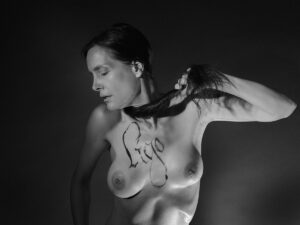
In the previous article on hermeneutics and reception aesthetics, the starting point was a seemingly harmless question: how does the ...
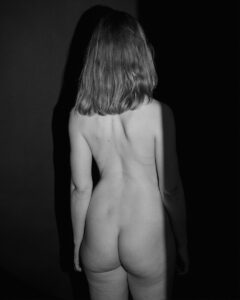
When we look at a work of art, sooner or later an astonishingly simple question arises: what does it actually ...
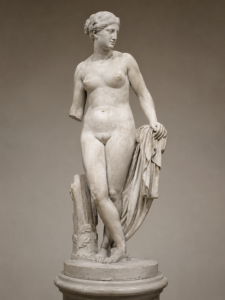
About nudity, age, expression, and, in addition, what can a body in the picture actually I'm not looking for a ...
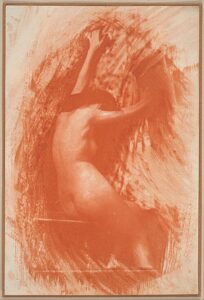
When photography began its triumphal advance in the nineteenth century, many people regarded it primarily as one thing: a technical ...
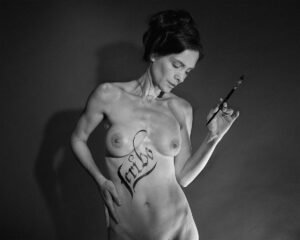
There are themes one encounters and thinks: interesting. There are others that make one pause briefly, jot down a note, ...
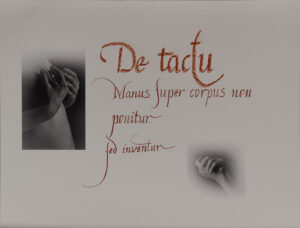
On Leonardo, red chalk, handwriting and the beginning of Studia Rubra Dear reader, anyone familiar with my photographic work will ...
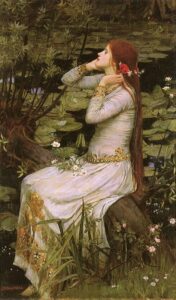
Or: Why a handful of young English artists began searching for the roots of art nearly 180 years ago. When ...
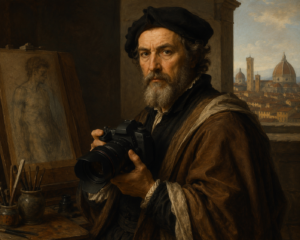
A small warning before we begin. Over the coming months, the Cogitationes will occasionally introduce names you might not expect ...

How many photographs do you have of your mother? Of your father? Of your children? Probably hundreds, perhaps even thousands ...
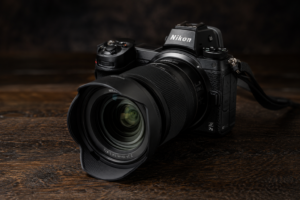
The following scene is not fictional. It happened exactly as I am about to describe it. It was a Sunday ...
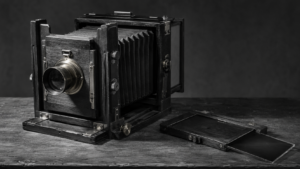
What a gelatin silver print is, and why its appearance still lives on in digital photography In texts about classic ...
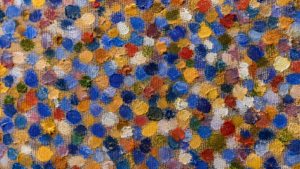
On Pointillism and Divisionism, photographic grain, and a reality that only comes into being in the eye When we approach ...
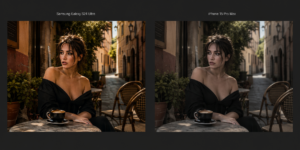
There is a statement I hear time and again, usually from people who encounter photography primarily as viewers rather than ...
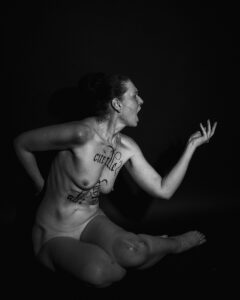
On Images, Flavours and the Emergence of CONVIVIUM It began with the seven deadly sins. I wanted to depict pride, ...
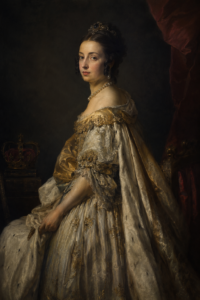
How to Look at Modern Art There is a moment that occurs with remarkable regularity in galleries devoted to modern ...

Curiously, shadows are slowly disappearing from our visual culture. Not only from photography, but from images in general. Pictures are ...
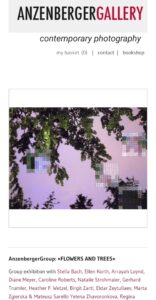
A Morning of Images and Conversations A few weeks ago I received the invitation to the gallery breakfast at the ...

A few weeks ago, I came across a study on the evolution of popular music. The researchers analyzed thousands of ...

A few years ago, I was standing in front of St. Stephen's Cathedral in Vienna with a group of friends ...

Few terms in contemporary photography are used as casually, as frequently and as confidently as “Fine Art”. At the same ...

Part 3: Why Have We Learned to Distrust Beauty? After spending so much time thinking about kitsch, I began to ...
Part 2: Does Universal Kitsch Even Exist? In the first part of this series, we explored a deceptively simple question: ...
Part 1: What Is Kitsch? A Question Every Artist Should Ask During one of my many journeys through Italy, I ...

Most people who travel to Ravenna are travelling into the past. The city is one of Europe's great artistic treasure ...

The history of technological innovation follows a remarkably consistent pattern. First, people insist something will never work. And the moment ...

People actually ask me quite often where my ideas come from. Which creative techniques I use. Whether I work with ...

The impertinence to look the other way It has become one of the art world’s most cherished habits to treat ...

Perhaps the valued reader has noticed that public debates repeatedly flare up around the question of what art is — ...

Perhaps the valued reader has already encountered my handwriting in various entries within these Cogitationes. Whether in guestbook entries at ...

There are poets one admires.And there are poets who slowly take root somewhere inside one’s own thinking. Max Herrmann-Neiße belongs, ...

A small survival guide for those who find themselves—by accident or by intention—somewhere between art and prosecco. (This text is ...

At this point, the esteemed reader may permit a small, almost heretical question: does art always have to be large? ...

There are certain themes that will continue to accompany the valued reader here with almost stubborn regularity, much like Cato ...

It did not begin with a theory, but with irritation. Standing once again in Florence before Michelangelo, I found myself ...

The Things We Do for Money Some people even work for it. Which is exactly why I found myself, once ...
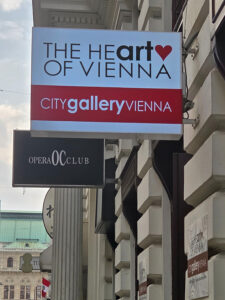
A Visit to Thomas Leimer and publicartists.online There are places within the art world that do not claim to be ...
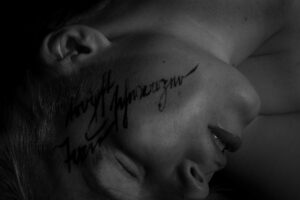
There are poets one reads, and there are poets who remain with you for years. Georg Trakl unquestionably belongs to ...
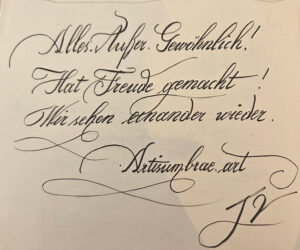
Visiting exhibitions belongs to the quieter, yet no less essential, parts of artistic work. Not as a social ritual, not ...
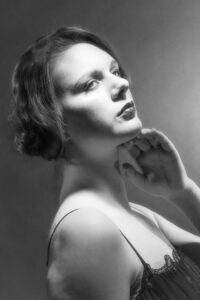
One of the questions I am asked again and again is this: why black and white? The simple answer would ...

Trude Fleischmann There are photographers who do not seize you through an entire body of work at first glance, but ...
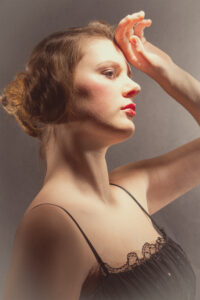
What happens when a photographic work dissolves into nothing. When people speak about art, they almost always speak about finished ...
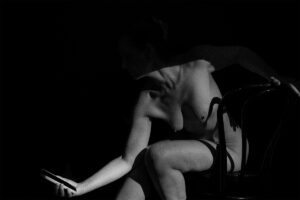
On photography, art, and the loss of seeing We live in a time in which images are everywhere, and yet ...
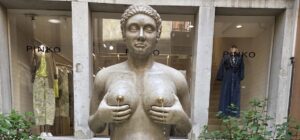
Travel reflections from Treviso Two tourists stopped in front of the fountain, cast a brief glance at it, and began ...
